
 By
By What is Enedis?
Enedis is the public distribution grid operator for electricity in France, covering 95% of the national territory. It is a wholly owned subsidiary of EDF and operates as a regulated monopoly under the supervision of the French energy regulator, the CRE (Commission de Régulation de l'Énergie). Enedis does not sell electricity — it delivers it.
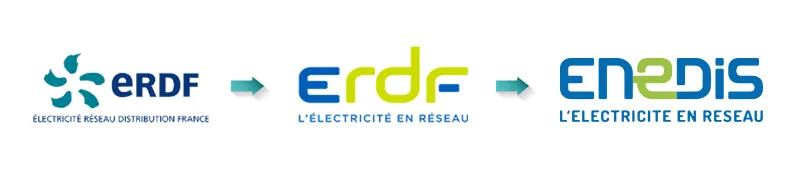
The company was known as ERDF (Électricité Réseau Distribution France) until June 2016, when the CRE required the name change to reduce confusion with its parent company EDF. In practice, nothing changed for consumers: the same technicians, the same network, the same regulated service — just a new name and logo.
The remaining 5% of French territory is served by ELDs (entreprises locales de distribution) — local operators that have existed independently since before nationalisation. Major cities with ELDs include Metz (UEM) and Grenoble (GEG). In ELD areas, fewer energy suppliers are available. See our guide on ERDF, GRDF and ELDs explained for details.
Enedis vs EDF: What Is the Difference?
EDF is an electricity supplier — you sign a contract with them and pay them bills. Enedis is the grid operator — it physically delivers the electricity to your home and manages your meter. Although Enedis is 100% owned by EDF, the two companies operate independently: Enedis must provide equal network access to all suppliers, whether EDF, TotalEnergies, Engie or any other.
This separation was mandated by the opening of the French energy market in 2000. Prior to liberalisation, EDF was both supplier and distributor. Today, EDF competes commercially with alternative suppliers, while Enedis remains a regulated monopoly delivering power to every household on its network regardless of supplier.
| Company | Role | When to contact them |
|---|---|---|
| Enedis | Grid operator — owns lines, meters, local network | Power cuts, new connection, Linky meter, power capacity changes |
| EDF (or any supplier) | Electricity supplier — sells energy, issues bills | Billing queries, contract changes, tariff options, cancellation |
A practical example: if you switch your electricity supplier from EDF to TotalEnergies, Enedis is not involved and nothing changes physically at your home. The same meter, the same cables, the same power quality — only the company you pay changes. If your power goes out, you call Enedis, not your supplier, because the fault is on the network they own.
If you are an EDF customer unsure whether to contact EDF or Enedis: contact EDF for all billing, contract and tariff matters; contact Enedis for all physical network issues.
What Does Enedis Do?
Enedis builds, operates and maintains the low-voltage distribution network — the poles, cables and transformers that bring electricity from the high-voltage transmission grid (managed by RTE) to your meter. Its four main responsibilities for consumers are below.
Meter management and technical interventions
When you open or close an electricity account, your supplier instructs Enedis to activate or deactivate your meter. Enedis also handles:
- Power capacity changes (modifying your subscribed kVA) ;
- Scheduled and special meter readings ;
- Switching between tariff options, e.g. base rate to heures creuses ;
- Emergency supply cuts for unpaid bills (instructed by the supplier).
New connections
If you are setting up electricity in a newly built home, Enedis manages the raccordement (grid connection). This involves laying a new line and installing a meter — a process that takes several weeks and incurs an installation charge set by the CRE.
Power outages and network repairs
Enedis operates around-the-clock emergency teams to restore power after a power outage. When you report a power cut, you contact Enedis — not your supplier — because the fault is on the network they own.
The Linky smart meter rollout
Since 2015, Enedis has led the nationwide deployment of the Linky smart meter. The Linky transmits consumption data automatically every day, eliminating the need for manual readings. By early 2025, 37.6 million Linky meters had been deployed — 95% of homes on the Enedis network (source: Enedis). Around 2.1 million homes remain without one, mainly due to refusals or difficult access; the target for 100% coverage is the end of 2026. Installation is free and does not require you to be home in most cases.
How to Contact Enedis in English
There is no dedicated English-language helpline at Enedis. All Enedis phone lines operate in French. For most everyday situations — opening an account, activating a meter, switching supplier — your supplier contacts Enedis on your behalf and you do not need to call them directly.
Ad — Selectra energy subscription service on the Enedis network.
Who to contact for each situation — use the table below to identify who to call, and the French phrase to use if you reach an Enedis agent directly.
| Situation | Action | French phrase |
|---|---|---|
| Moving in — open an account | Call Selectra (+33 9 87 67 37 93). Your new supplier contacts Enedis to activate the meter. | « Mise en service » |
| Power outage | Enedis emergency: 09 72 67 50 + your département number. Power outage guide. | « Panne de courant » |
| New home — first connection | Via your supplier or Selectra. See our new home electricity guide. | « Raccordement » |
| Billing or contract query | Contact your electricity supplier — Enedis does not handle commercial matters. | « Service client » |
| Switch supplier | Call Selectra or contact your new supplier directly. Switching is free; Enedis is handled automatically. How to switch. | « Changement de fournisseur » |
- Coupure d'électricité → Power cut / outage
- Numéro PDL → Meter point reference (on your bill)
- Mise en service → Meter activation
- Raccordement → Grid connection (new home)
- Compteur Linky → Linky smart meter
Enedis Service Charges
Enedis service charges are set by the CRE and updated periodically — not by your energy supplier. Most common operations (supplier changes, standard meter activations, Linky installation) are free or carry a modest fee. Costs rise significantly for same-day or express interventions.
The table below reflects Enedis's published residential tariff schedule. Always verify current rates with Enedis or your supplier before requesting an intervention, as charges are revised regularly by the CRE.
| Intervention | Indicative price (TTC) |
|---|---|
| Supplier change | Free |
| Contract cancellation | Free |
| Linky meter installation | Free |
| Meter activation (existing line) | ≈€16–17 |
| New service (first-time connection) | ≈€50–51 |
| Express service (within 48h) | ≈€55 |
| Same-day service (before 3pm) | ≈€53–133 |
| Special meter reading | ≈€32 |
| No-show fee | ≈€32 |
| Late cancellation (< 2 days) | ≈€18 |
| Power capacity change | ≈€38–160 |
| Cut for unpaid bills / 3 kVA reduction | ≈€54 |
| Network separation | ≈€223 |
| Meter verification | ≈€38–344 |
| Meter fraud penalty | ≈€472 |
Figures are approximate, based on the Enedis residential schedule regulated by the CRE. Charges are revised periodically — confirm current rates before any intervention.
For most expats, the only charge you are likely to encounter is the meter activation fee when moving in (~€16–17) and possibly the no-show fee if you miss a technician visit. Using Selectra (+33 9 87 67 37 93) avoids having to navigate Enedis's French-language processes directly.
Enedis and France's Energy Transition
Enedis plays a central infrastructure role in France's move towards renewable energy. Two areas are directly relevant for households.
Solar panels and self-consumption
If you install solar panels and want to sell surplus electricity back to the grid, Enedis manages the technical raccordement and meter configuration. The process is initiated via your supplier or the Enedis online portal. France's green electricity offers are increasingly tied to how well Enedis integrates local renewable generation into the grid.
The smart grid and Linky
The Linky meter is the foundation of Enedis's smart grid strategy. By collecting granular consumption data, Enedis can identify network losses, detect fraud and enable time-of-use tariffs such as heures creuses. For consumers, Linky makes it easier to benefit from cheaper off-peak electricity rates and track consumption via the Enedis online client space.
Frequently Asked Questions
EDF is an electricity supplier — you sign a contract with them and pay your bills to them. Enedis is the grid operator — it owns and maintains the physical network of cables and meters. Even if you switch away from EDF to another supplier, Enedis remains your network operator and your power delivery does not change.
Yes. Enedis is the new name for ERDF (Électricité Réseau Distribution France). The company was rebranded in June 2016 following a request by the French energy regulator CRE, which found the ERDF name too similar to EDF. The company, its services and its network are identical — only the name changed.
There is no dedicated English helpline at Enedis — all their phone lines operate in French. For English-language help with meter activation, power outages or switching supplier, call Selectra's free English-speaking service on +33 9 87 67 37 93. For power outages specifically, Enedis has a French emergency line: 09 72 67 50 followed by your département number.
No. Switching supplier is free and requires no physical intervention. The electricity flowing through your cables stays exactly the same — only the company you pay changes. Enedis continues to manage your meter and the grid regardless of your chosen supplier.
A Linky is the smart electricity meter rolled out by Enedis across France. It transmits consumption data daily, replacing manual meter readings. Installation is free — if your meter has not yet been replaced, Enedis will contact you to schedule it. By early 2025, 37.6 million Linky meters had been deployed, covering 95% of homes on the Enedis network (source: Enedis). Full rollout is targeted for the end of 2026.