
 By
By 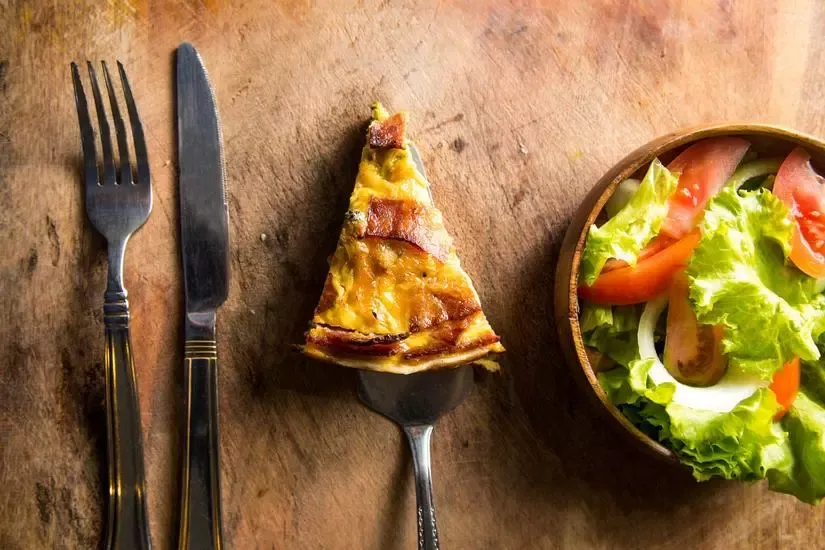
1. Quiche Lorraine
This ain’t your mama’s quiche. Originally from the region of Alsace, this French delicacy is full of eggs, milk, cream, nutmeg and grilled ham. (Other versions include mushrooms, chicken or leeks.) It’s a popular lunch staple in many a boulangerie for only a couple Euros.
How do I say it? Key-shh lore-ayne.
How do I order it? “Je vais prendre la quiche Lorraine.”
2. Ratatouille
Is the only thing you know about ratatouille from the Disney Pixar film with the same name? Not anymore. Order this dish to receive a warm stew full of tomatoes, zucchini, eggplant, carrots, bell peppers and a handful of spices. The vegetables are first cooked in some fat in a pan and then baked.
Hailing from the French region of Provence, this dish is a much-loved French staple that is continually debated: French chefs still cannot agree on whether the vegetables should be cooked separately or together before being put in the baking dish. Lucky for you, regardless of how it’s cooked, it’ll taste good either way.
How do I say it? Ra-ta-two-ee.
How do I order it? “Je vais prendre la ratatouille.”
3. Foie gras
Maybe it’s just us, but foie gras has always just sounded like something fancy that we’re not rich enough to order. In some restaurants that may be true, but if you’re on vacation in France, there’s no excuse.
Foie gras literally means “fatty liver” and is made up of duck or goose liver. It’s a traditional French food, being an important part of Christmas and New Year’s Eve meals in France. However, there is some controversy around the delicacy as it involves force-feeding ducks and geese to enlarge their livers. That being said, this probably isn’t the best dish for animal rights supporters.
A friend once described it to us as “meat butter,” which, frankly, seems like an accurate description. You’ll taste the animal with the ability to spread it on bread or crackers. Go the extra mile and top it with some fig jam. Mmm. Magnifique.
How do I say it? Fwah-grah.
How do I order it? “Je prend le foie gras.”
4. Gratin Dauphinois
Who doesn’t love potatoes? Hailing from the Grenoble region among the French Alps, this dish is just good-old-fashioned sliced taters with cream, milk and nutmeg. Sometimes cheese is added, depending on the chef.
How do I say it? Grah-tan daw-fin-oo-ah.
How do I order it? “Je vais prendre le gratin dauphinois.”
5. Coq-au-vin
Literally translated to “rooster in wine,” this dish traces its roots back to the Burgundy region, situated in east-central France. Its primary ingredients consist of red wine, mushrooms, bacon and, of course, rooster.
It’s similar to another classic French dish, bœuf bourguignon, which is cooked in a similar style and with similar ingredients (using beef instead of rooster, of course).
How do I say it? Cock-oh-van.
How do I order it? “Je vais prendre le coq-au-vin.”
6. Bœuf Tartare
Okay, so maybe you’re only used to eating raw fish in sushi. Raw, minced beef sounds out of the question, right? It does until you’ve seen how the French prepare it.
Chock full of spices, this dish will make you forget all your raw meat woes. Depending on the restaurant, you may also get a cooked egg sitting on top. And you’ll get some fries or a side salad to boot.
How do I say it? Buff-tar-tar.
How do I order it? “Je vais prendre le boeuf tartare.”
7. Soupe à l’oignon
Yes, obviously this is a French dish because its translation, French onion soup, has “French” in the name - but it’s so good that we don’t blame the French for taking credit for it. Caramelized onions, beef stock, brandy, cheese...what more could you ask for?
(When we say cheese, though, we mean a lot of cheese. Don’t be fooled by the cute little soup bowl. You definitely get your money’s worth in fromage -- lactose-intolerant readers beware!)
How do I say it? Soup-a-lon-ee-on.
How do I order it? “Je vais prendre la soupe à l’oignon.”
8. Fondue Savoyarde
More cheese! (Sorry again to those lactose-intolerant readers.) This is the cosiest treat to have on cold winter nights. The cheese combination varies from person to person. Some like to keep their fondues to just emmental and gruyère, while others like to throw in a little beaufort and comté, too.
Whatever the combo, this dish is delicious and super fun to eat. You get to dip bread, veggies, or whatever else you desire into a vat of boiling cheese...seriously, what’s better than that?
How do I say it? Fon-due sav-wah-yard.
How do I order it? “Je vais prendre la fondue savoyarde.”
9. Escargot
Out of all the French dishes we’ve listed, this is probably the most well-known. Many a joke has been made about the French eating snails. And sure, you may have had snails before in your home country. But have you ever had them with the original tastes and toppings? We didn’t think so.
The snails are cooked and left in their shells right on your plate, and then doused in a butter-herb concoction that will leave you wanting more (we always do!).
How do I say it? Ess-car-gaw.
How do I order it? “Je vais prendre l'escargot.” (Remember to keep the “L” with the word, like you’re saying “less-car-go.”)
10. Croque-Monsieur/Croque-Madame
You’ll see this culinary couple in almost every French café.
The original Croque-Monsieur is a hot sandwich made up of two pieces of bread filled with ham and cheese. The whole thing is cooked and then sprinkled with extra cheese on top. A Croque-Madame includes a cooked egg on top.
How do I say it? Crock-miss-e-ugh/crock-mad-ahm.
How do I order it? “Je vais prendre le croque-monsieur/je vais prendre le croque-madame.”
Go to this other page to find out the top 10 French landmarks we can only recommend that you visit while you're in France!